
The weasel (Mustela nivalis) is the smallest carnivore in Europe. Its streamlined body, predator reflexes, and fast metabolism make it an animal suited for hunting in the wild, not for apartment living. Despite this, online searches for the weasel as a pet are increasing, driven by the trend of new pets (NAC) and a growing curiosity about mustelids.
Weasel and ferret: a confusion that fuels the trend
Part of the enthusiasm for the weasel is based on a zoological misunderstanding. The ferret, domesticated for several millennia, belongs to the same family of mustelids. Its appearance resembles that of the weasel, and viral videos often mix the two species.
The difference is, however, significant. The ferret (Mustela putorius furo) is a domestic subspecies of the European polecat. It tolerates cohabitation with humans, accepts handling, and adapts to an enclosed space. The weasel remains a wild animal, territorial, solitary, and with a strong flight instinct.
Those wishing to adopt a domestic weasel with Amazing Pet Place will find detailed information on the differences between mustelids and the living conditions of these animals.
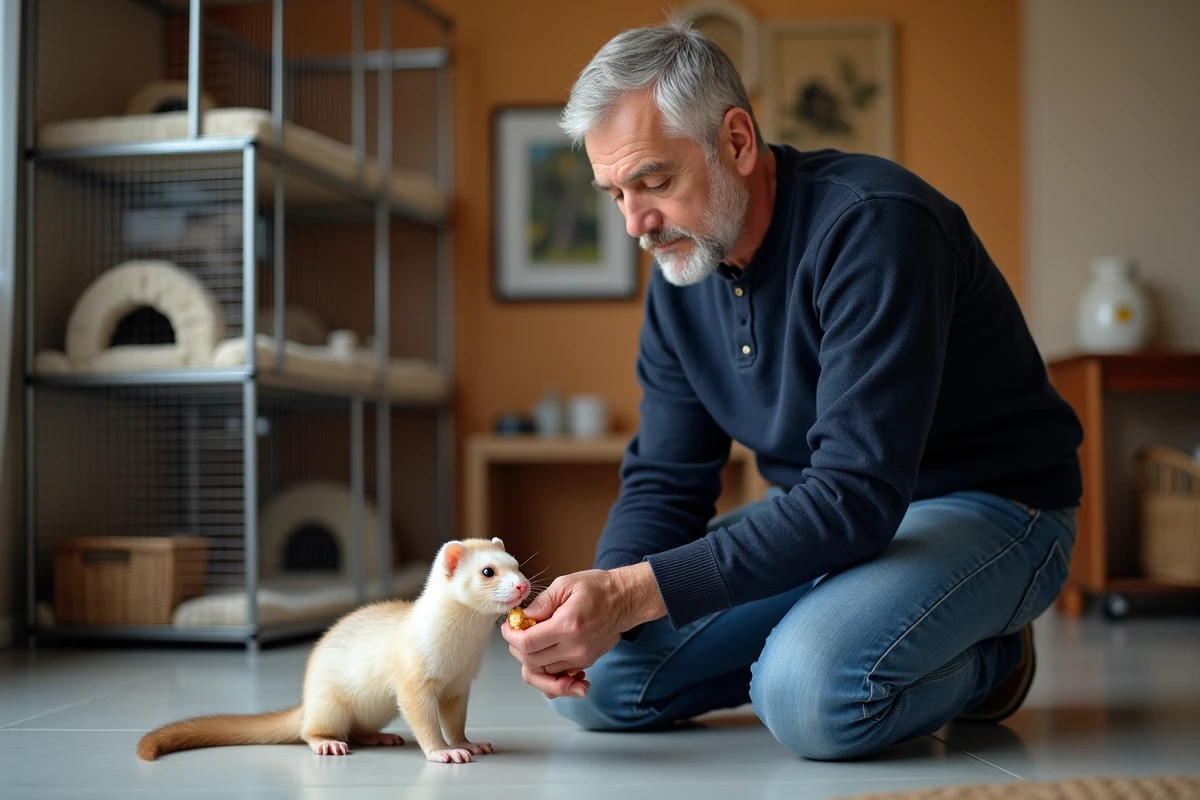
Specialized forums and social media perpetuate this confusion. A user posts a photo of “their weasel,” which is actually a light-colored ferret. The post circulates, gathers reactions, and establishes the idea that one can live with a weasel like with a cat.
French regulations on the keeping of wild mustelids
Since 2021, France has strengthened its legislative framework regarding the keeping of wild animals. The law aimed at combating animal abuse has tightened the conditions for acquiring and housing non-domestic species. Wild mustelids, including the weasel, are directly affected.
The weasel is a protected species in a large part of the European territory. Its capture, possession, and commercialization are regulated by national and community texts. Keeping a weasel without specific prefectural authorization exposes one to penalties.
The conditions for obtaining a capacity certificate (mandatory for keeping non-domestic wildlife) are demanding:
- Justify training or documented experience in breeding the species in question, validated by the departmental directorate for population protection
- Have facilities that meet the biological needs of the animal (outdoor enclosure, escape areas, appropriate meat-based diet)
- Submit a detailed file to the administration, with an on-site inspection before the authorization is granted
In practice, individuals dreaming of a pet weasel face an administrative wall designed to protect wildlife, not to facilitate the acquisition of a pet.
Biological needs of the weasel and limits of captivity
The metabolism of the weasel is among the fastest in the mammalian kingdom. Its heart beats at a very high frequency, and it must eat frequently to maintain its body temperature. In the wild, a weasel hunts several times a day for live prey (voles, mice, small birds).
An exclusively meat-based diet with fresh prey is difficult to replicate in domestic captivity. Ferret kibble does not meet the specific nutritional needs of the weasel. Deficiencies appear quickly: weight loss, behavioral issues, self-mutilation.
Space is another major issue. The weasel travels daily across a territory that can cover several hectares. Even a large enclosure remains a tiny fraction of its natural range. Confinement causes chronic stress, resulting in stereotypies (repetitive movements without function) and increased aggression.

The life expectancy in non-specialized captivity drops compared to that observed in the wild. Wildlife centers that take in illegally held weasels regularly observe pathologies related to stress and malnutrition.
NAC and wildlife: why the boundary matters
The appeal of NAC continues unabated. Nearly six out of ten French people report owning a pet, and the trend of considering pets as family members affects the vast majority of owners. This “pet parenthood” drives some to seek atypical companions, perceived as more original than a cat or dog.
The boundary between domesticated NAC and wild animals remains poorly understood. A domestic rat, an octodon, or a ferret are species whose lineage has been selected for life with humans. The weasel, fox, or otter have not been. No domestication program for the weasel exists to date.
Animal protection associations and wildlife mediation centers regularly warn about the consequences of this confusion:
- Weasels captured young in the wild and resold through informal channels, to the detriment of local populations
- Abandonments in shelters or care centers when the owner realizes that the animal cannot be tamed
- A direct ecological impact, as the weasel plays a role in regulating rodent populations in agricultural and forest ecosystems
The desire for an atypical animal companion is legitimate, but not all species are candidates for domestication. The ferret, rabbit, rat, or guinea pig offer suitable alternatives for indoor living, with documented needs and responsible breeding pathways.
The online popularity of the pet weasel reflects more of a viral phenomenon than an animal reality. Clicks and shares do not change the biology of a wild predator, nor the French law that protects it.