
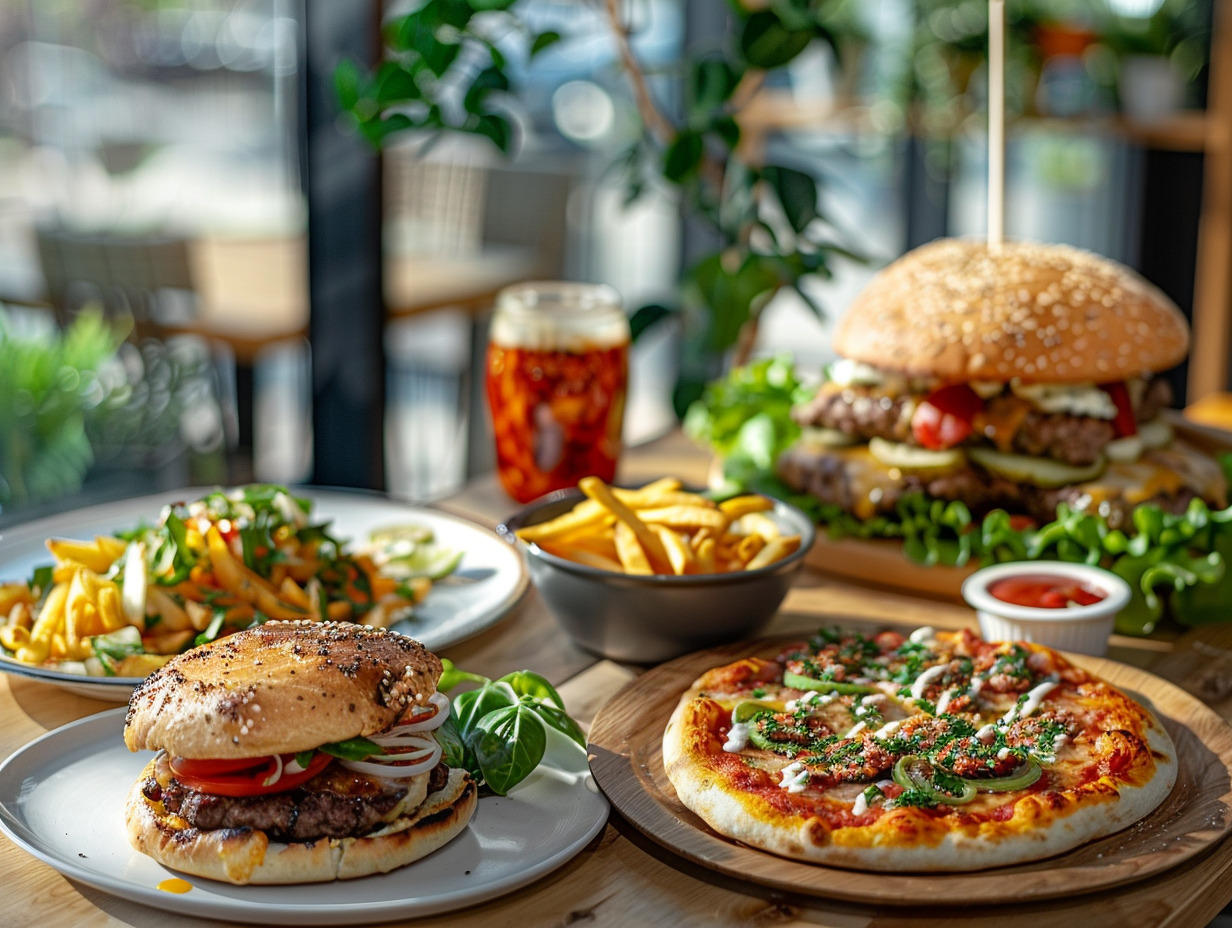
In the fast-food arena, the options for a quick meal are as varied as they are caloric. Pizza, with its soft crust and generous toppings, stands against the burger, a symbol of American culture, often accompanied by crispy fries. McDonald’s, the undisputed giant of fast food, offers a range of menus from the Big Mac to the McFlurry. The kebab, of Turkish origin, served with bread, vegetables, and often accompanied by fries, provides a spicy alternative. Comparing their caloric intake reveals not only our eating habits but also highlights the dietary challenges associated with consuming these popular meals.
Caloric Analysis of Favorite Fast Foods: A Comparative Study
Fast food, the embodiment of quick dining, often finds itself at the center of nutritional debates. Let’s examine the caloric data to discover the least caloric fast food. At McDonald’s, the flagship product, the Big Mac, boasts 530 kilocalories. Its direct competitor, the Whopper from Burger King, surpasses this value with 630 kilocalories. These figures, though high, are exceeded by the Kebab, offered by the KFC chain, which contains 574 kilocalories.
Pizza Hut stands out with a less caloric option: a standard slice of pizza contains 265 kilocalories, which might suggest a lighter choice. The amount consumed in one sitting can quickly reverse this perception. Meanwhile, Quick offers the Giant, a burger that aligns with the Big Mac at 535 kilocalories.
In this caloric showdown, the discerning consumer must weigh each option according to their energy needs and taste preferences. The caloric comparison reveals significant discrepancies among these fast-food giants, where pizza seems to offer a less calorie-dense alternative, at least per equal portion. Consider portion sizes, the overall composition of meals, and sides to assess the real impact of these meals on your daily caloric intake.
Health Impact and Tips for Responsible Consumption
Regular consumption of fast food has a health impact. Foods high in calories, fats, sugars, and cholesterol contribute to increased risks of cardiovascular diseases. The size and weight of fast-food products, often exceeding recommended portion sizes, amplify this risk. Monitor not only the kilocalories but also the fat and added sugar content.
Physical activity, an integral part of a balanced lifestyle, is essential to counteract the effects of a caloric diet. It helps regulate metabolism and maintain a healthy weight. Compensate for meals taken at fast-food chains with regular exercise, in line with daily health recommendations.
For responsible consumption, diversify your diet and prioritize foods that are higher in protein and lower in fats. The kebab, despite its caloric richness, contains proteins that are essential for the body. Evaluate the nutritional information provided by fast-food chains and make informed choices. A collective and individual awareness is necessary to preserve our health capital.