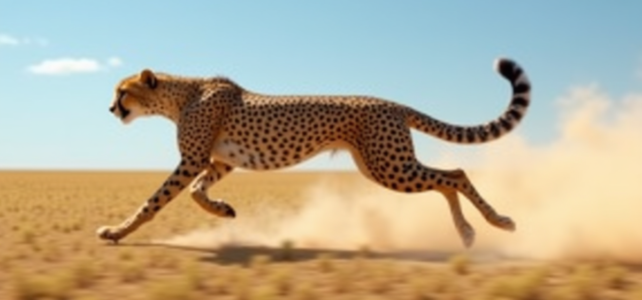
On the vast African plains, the frantic race for survival is a daily reality. Cheetahs, known for their lightning speed, reach peaks of 110 km/h, making them the undisputed masters of terrestrial speed. Other creatures compete in speed in different domains.
In the oceans, the swordfish slices through the waters at nearly 90 km/h, far surpassing its aquatic competitors. Meanwhile, in the skies, the peregrine falcon dives at dizzying speeds of over 320 km/h to capture its prey. This diversity of speed champions showcases the incredible adaptation of wildlife to the challenges of their respective environments.
The fastest land animals
In the animal kingdom, speed is often synonymous with survival. Among the fastest land animals, a few species stand out particularly.
The cheetah, of course, remains the undisputed king of terrestrial speed, with a recorded peak of 120 km/h. This performance, due to a unique morphology, allows it to capture prey in the blink of an eye.
The lion, while not as fast, is still impressive. Capable of running at 80 km/h, it uses this speed for lightning-fast attacks over short distances.
The American antelope, on the other hand, can reach 95 km/h, while the springbok competes with a top speed of 110 km/h. These gazelles are perfect examples of adaptation to open environments where quick escape is crucial.
Here is a summary table of maximum speeds:
| Animal | Maximum speed (km/h) |
|---|---|
| Cheetah | 120 |
| Springbok | 110 |
| American antelope | 95 |
| Lion | 80 |
| Ostrich | 97 |
| European hare | 80 |
Also consider the speed of a wild boar. This wild mammal can surprise, reaching peaks of 50 km/h. Although far behind the cheetah, this speed allows the wild boar to escape its predators and navigate wooded areas with agility.
The fastest land animals demonstrate remarkable adaptation to their environments, illustrating the diversity and complexity of survival mechanisms in the wild.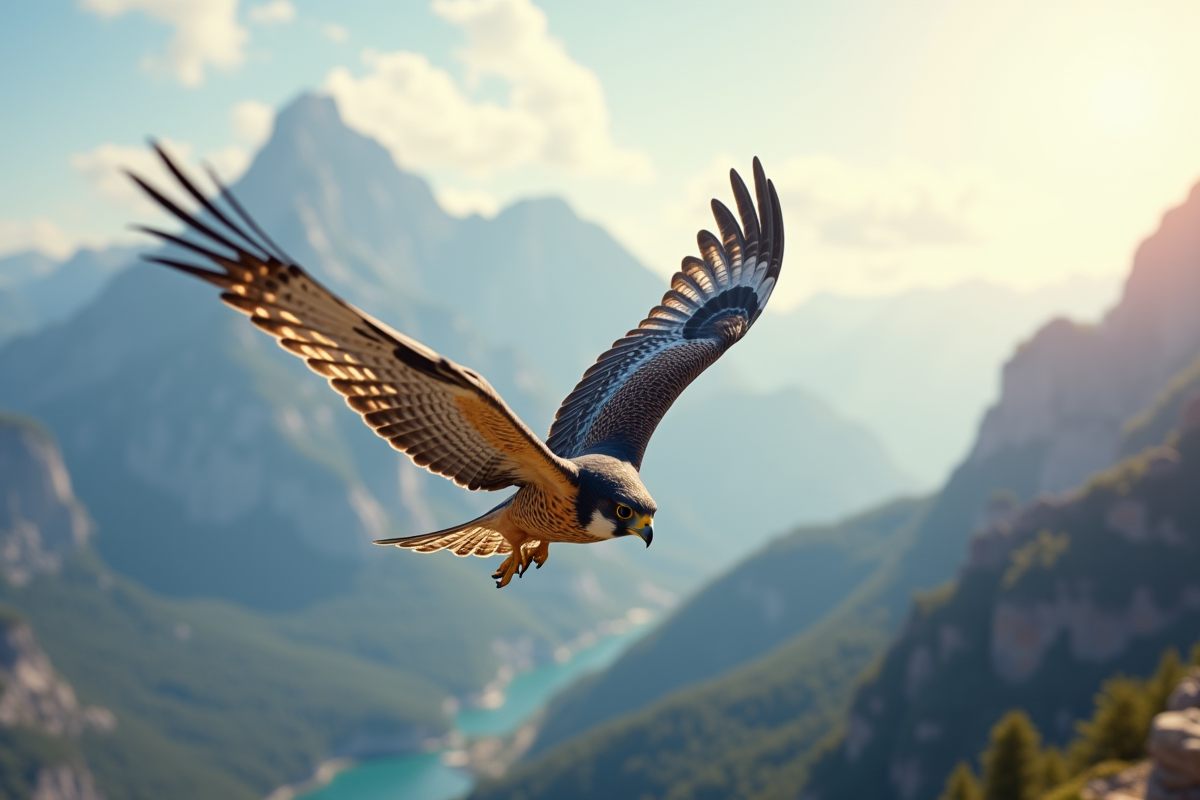
The speed champions in the air and in the water
The aerial and aquatic performances of animals compete in ingenuity to dominate their respective ecosystems. Among them, some stand out with astonishing speeds.
The peregrine falcon holds the absolute speed record in the animal kingdom. During a dive, it can reach over 380 km/h, propelling it to the top of the speed champions.
The golden eagle is not far behind, capable of reaching 320 km/h in a dive. These birds of prey use their speed to hunt with deadly precision.
- The peregrine falcon: 380 km/h
- The golden eagle: 320 km/h
- The dragonfly: 100 km/h
In the oceans, the sailfish and the shark compete for the title of fastest fish, both capable of exceeding 110 km/h. This speed allows them to capture prey with remarkable efficiency.
Consider the impressive speed of these animals not only as a physical feat but also as a complex evolutionary adaptation. Nature has equipped these species with exceptional means to survive and thrive in often hostile environments.
Speed, whether on land, in the air, or underwater, remains a fascinating and essential attribute for the survival of many species.