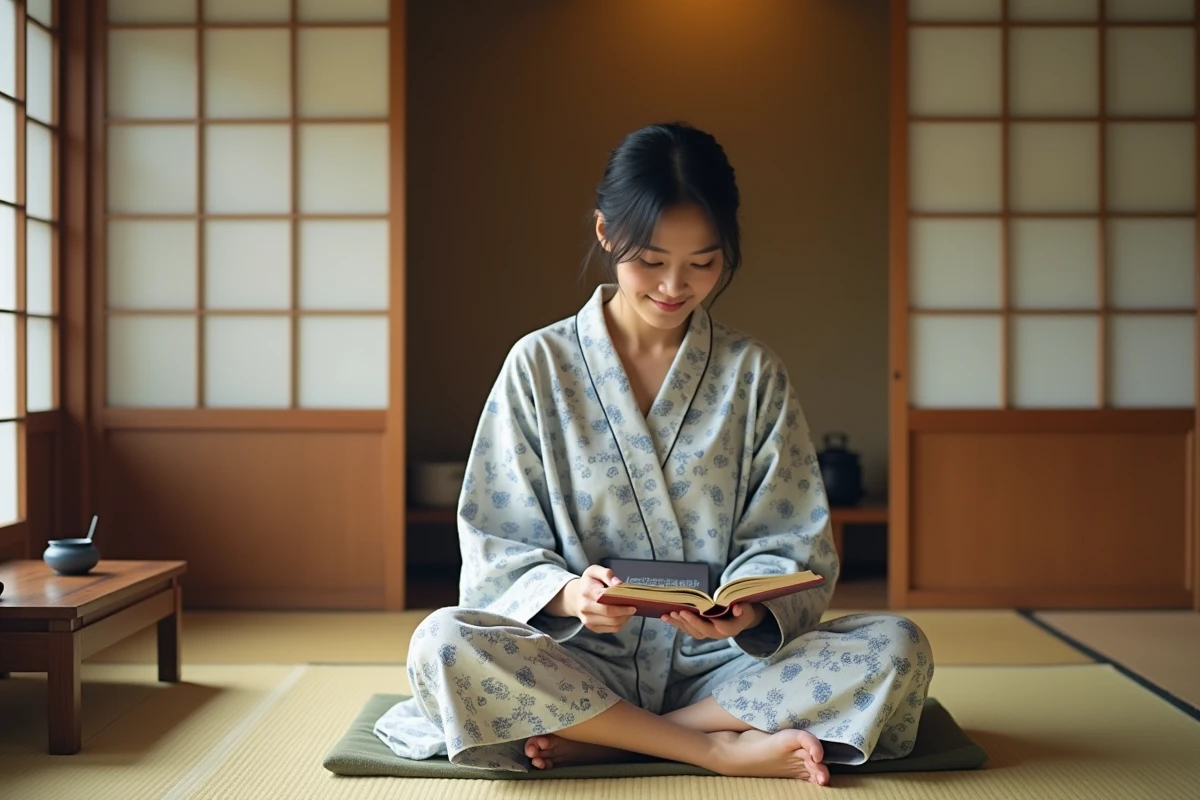
When you step through the door of a Japanese hotel, sometimes a simple garment is enough to measure the distance between local habits and our reflexes from elsewhere. Here, pajamas are not just a nighttime affair: they tell as much about tradition as they do about the art of hospitality.
In the majority of Japanese hotels, a specific garment, the yukata, is provided upon arrival. Wearing it is not legally required, but it remains widespread, sometimes even expected in certain traditional establishments. Internal rules may differ, ranging from a tacit obligation to a mere suggestion.
Some hotels prohibit wearing personal pajamas in common areas, while others impose no restrictions in the room. Travelers then discover a subtle boundary between local custom and individual freedom, the result of a balance between respect for cultural practices and adaptation to the comfort of visitors.
Pajamas in Japanese Hotels: Between Custom and Modern Comfort
Choosing to sleep in pajamas in Japanese hotels sometimes means adopting a ritual that illustrates what distinguishes a traditional Japanese accommodation from a simple hotel room. The ryokan, this typical inn, always reserves a carefully folded yukata on the futon. This garment serves both as loungewear and pajamas: it is worn to move from the tatami to the bathroom, and sometimes even to share a meal in the communal dining room. From one place to another, practices fluctuate, but the custom remains in the Japanese Alps, small towns, or historic neighborhoods in Tokyo and Osaka.
However, nothing truly obliges one to wear this garment. Many hotels, especially in urban areas, allow each guest the freedom to choose between their own pajamas and the provided yukata. The essence lies elsewhere: respecting the ambiance of the place. Some travelers hesitate: adopting the local pajamas, is it a sign of a desire for integration or just a matter of comfort? This debate now animates many practical guides dedicated to the authentic Japanese experience, where the modernity of hotel chains coexists with tradition.
In common areas, baths, and dining rooms, discretion prevails. Wearing the yukata blurs differences, establishing a precious equality without ever forcing uniformity. Once the door to the room is closed, everyone regains their clothing autonomy. Price, range, location, whether it’s a hotel facing a UNESCO World Heritage site or an address in the heart of a big city, all of this matters less than the weight of tradition and the desire to feel good for the night.
Should You Really Wear the Provided Pajamas or Bring Your Own?
Arriving at a Japanese hotel often raises an unexpected question: must one wear the provided garment, or is it possible to sleep in one’s own pajamas, away from prying eyes? For a first experience in Japan, this question naturally arises. In most establishments, whether ryokan or shukubo, these Buddhist temple accommodations, a fresh and lightweight yukata awaits on the bed or futon.
Practices vary depending on the type of accommodation and the services offered. In Tokyo, Osaka, or large cities, there is no obligation to swap one’s pajamas for the yukata. One can wear it to cross the communal dining room, go to the bathroom, or simply stay in their room. Others prefer to keep their own pajamas, a matter of comfort or modesty, especially when it comes to sharing public baths, or during a stay in an apartment with its own bathroom and private kitchen.
In a Buddhist temple or shukubo, the atmosphere changes: the presence of the yukata during movements between the room, meditation hall, or dining room reflects the spirit of the place, without ever becoming a strict obligation. As for underwear, it is kept under the pajamas or yukata, a guarantee of respect and comfort in shared spaces.
Here are the key points to remember for navigating between tradition and comfort in Japan:
- In the room, the choice between pajamas and yukata belongs to each individual.
- In shukubo or temples, following tradition is appreciated but not imposed.
- In France, this custom has no equivalent: discovering Japan also means accepting these practices, balancing respect for codes and personal adaptation.

Tips for Respecting Etiquette and Fully Enjoying Your Stay in Japan
In a traditional inn, the yukata placed in the room is not just a simple night garment. It is used to cross the communal dining room, access public baths, or settle into shared spaces. Even for a short stay, wearing the yukata allows one to grasp a part of the Japanese experience. Keeping one’s underwear underneath remains the norm, a discreet modesty shared across all traditional Japanese accommodations.
In the city, Tokyo, Osaka, freedom prevails. Personal pajamas, yukata, or provided clothing, everyone adjusts according to their desires. In a shukubo or Buddhist temple, sobriety and restraint are more pronounced. Depending on the season, cold nights in the Japanese Alps, or the mildness of spring or autumn, the choice of clothing adapts to the climate without neglecting tradition.
Here are some practical tips for making the most of this experience:
- In the bathroom, the yukata stays in the locker: access to public baths is done nude, in accordance with local custom.
- In the dining room, wearing the yukata is common, especially for breakfast or dinner in traditional establishments.
- During a stay in a shukubo in Koyasan or Wakayama, simplicity and respect for the rhythm of the places take precedence; take the time to read the instructions posted in the room.
Remember to book your accommodation through online booking sites to compare offers and anticipate the specifics of each place. Whether your journey takes you to Tokyo, Osaka, Nikko, or on the rails of the Japan Rail Pass, one thing remains constant: the attention to detail, respect for customs, and the delicacy of hospitality are the hallmarks of a successful stay in Japan.
In the end, under the soft lights of a Japanese room, everyone makes the night their own way. Between custom and comfort, the best attire remains that which allows one to fully appreciate the Japanese interlude, without ever having to choose between tradition and freedom.