
The Toulouse real estate market remains one of the most active in Occitanie. The city attracts employees from the aerospace sector, students, and families seeking a sunny living environment at prices significantly lower than those in the capital. Searching for housing in Toulouse involves navigating numerous listings, neighborhoods with very different profiles, and some regulatory subtleties that portals do not always highlight.
Tight Zone in Toulouse: What It Changes for the Displayed Rent
Toulouse does not apply rent control in the same way as Montpellier or Paris, with a reference rent increase set by prefectural decree. However, the city is classified as a tight zone, which has a direct consequence during a re-rental.
In a tight zone, the landlord cannot, except for limited exceptions, set a rent higher than that of the previous tenant. The exceptions concern significant improvement works or a rent that is clearly undervalued compared to the neighborhood.
For a future tenant, the practical consequence is as follows: the rent of the previous occupant serves as the reference ceiling, not the price displayed in the listing. Asking the landlord or agency for the previous rent amount allows for verifying the compliance of the proposed price. If the listing does not mention this information, it is a signal to investigate further before signing.
By browsing Cileo Habitat listings in Toulouse, one can sort the results by ascending price, which facilitates comparison between neighborhoods for the same budget.
Toulouse Neighborhoods: Prices and Quality of Life Do Not Follow the Same Logic
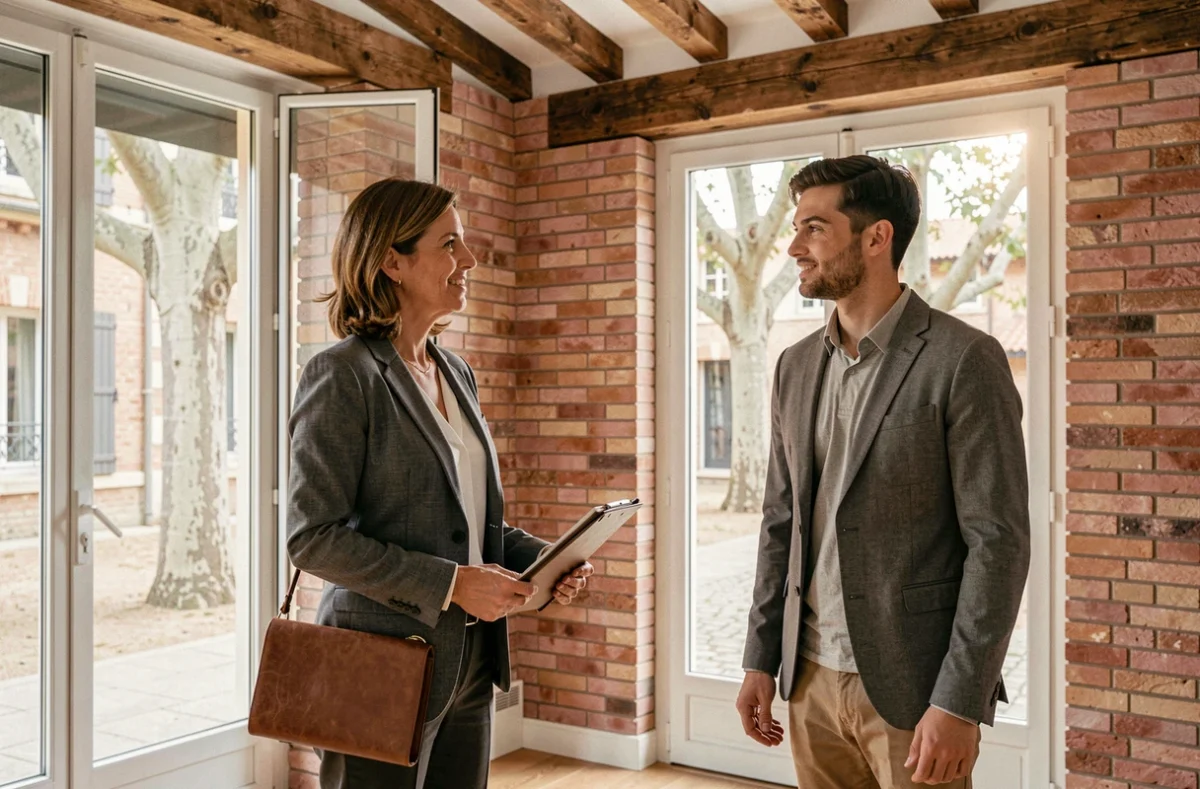
Real estate listings in Toulouse cover very contrasting urban realities. The historic center (Capitole, Carmes, Saint-Étienne) concentrates character properties, often old apartments with parquet floors and moldings, but also poor energy performance.
The energy performance diagnosis (DPE) increasingly weighs in on the decision. An apartment rated F or G in the center may seem attractive per square meter, but heating costs and the gradual restrictions on renting (ban on renting G-rated properties since 2025) alter the actual calculation.
Areas to Search Based on Profile
- Saint-Cyprien and Saint-Michel: lively neighborhoods, well-served by the metro (lines A and B), with a varied rental and purchase offer. Prices remain accessible compared to the city center.
- Compans-Caffarelli and Minimes: close to the Canal du Midi, quick access to the center. These areas attract young professionals and offer a dense rental market.
- Borderouge and Croix-Daurade: to the north, these neighborhoods have benefited from the extension of line B. The new housing offer is larger here, with recent residences often rated better on the DPE.
- Rangueil and Sauzelong: popular with students for their proximity to universities, with some of the lowest rents in the city for shared housing.
The choice of neighborhood also conditions the type of listings available. In older areas, properties often go through local agencies. In newly constructed zones, developers and social landlords publish directly on their platforms.
Metro Line C: A Selling Point to Be Taken with Caution
Several real estate listings in Toulouse mention the future metro line C as an asset for the property offered. Caution is advised on this point.
In October 2026, press reports indicate a possible delay of several months to over a year compared to the initially planned commissioning at the end of 2028. The project timeline is under reassessment, and buyers betting on a capital gain linked to future service are taking a temporal risk that is difficult to quantify.
The project also includes ancillary developments, such as a park-and-ride and a bus station planned at Colomiers-Gare, with an anticipated opening in 2029. These infrastructures could change traffic flows towards the western part of Toulouse, but their timeline remains conditional as well.
Differentiating existing transport from announced services remains the best framework for assessing the actual accessibility of a property. The metro lines A and B, the tramway, and the Tisséo bus network are the reliable benchmarks today.
Real Estate Listings in Toulouse: Recurring Traps to Spot
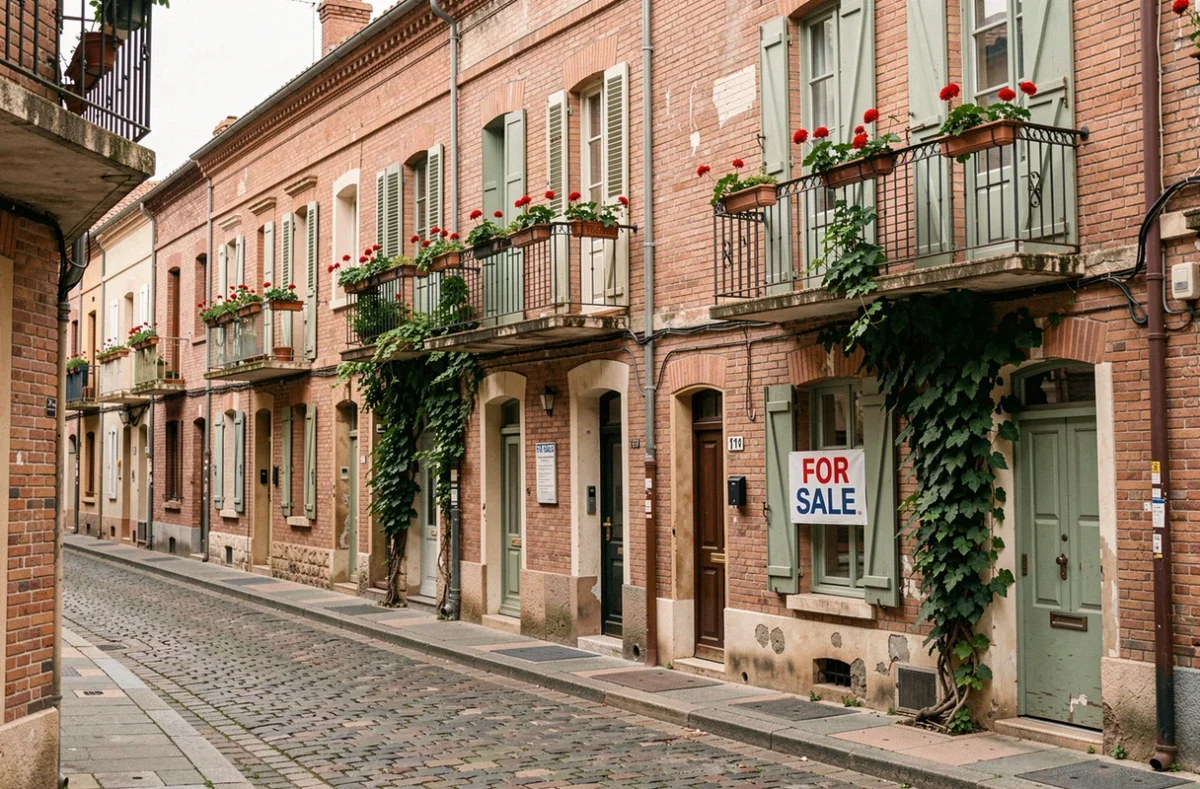
The proliferation of listing portals creates a volume effect that does not always facilitate selection. A few reflexes can help filter effectively.
The DPE as a Priority Filter
A property listed at an attractive price but rated F or G on the energy performance diagnosis poses a concrete problem. In rentals, G-rated properties are already banned from leasing. F-rated properties will follow in the coming years. In purchases, the cost of energy renovation works can represent a significant part of the total budget.
Checking the DPE class even before visiting helps avoid wasting time on properties that would require heavy investment to remain compliant.
Real Costs Beyond Rent or Price
Condominium fees in the old buildings of central Toulouse vary greatly from one residence to another. Listings rarely mention the details of the items (collective heating, elevator, concierge). Asking for the projected budget of the condominium or the last general assembly minutes allows for anticipating recurring expenses and voted works.
For a purchase, notary fees in Occitanie follow the national scale, but the total amount depends on the price of the property and its nature (new or old). Including these fees from the research phase avoids unpleasant surprises at the time of signing.
The Toulouse market remains clear for those who take the time to check the fundamentals: previous rent in rentals, DPE, actual charges, and the state of existing transport. These four criteria are sufficient to eliminate the majority of listings that do not correspond to a solid project.