No Japanese garden incorporates strict symmetry, even in the most orderly spaces. The addition of stone lanterns is not rooted in ancient tradition but rather in modern adaptation, popularized in the 19th century. Mosses are not systematically planted: their presence depends on the soil and local humidity, often left to the whims of the weather.
The principles of composition remain codified, but notable variations exist according to schools and regions. Some rules, passed down orally, escape written records and do not appear in classical treatises.
Why the art of the Japanese garden fascinates and soothes
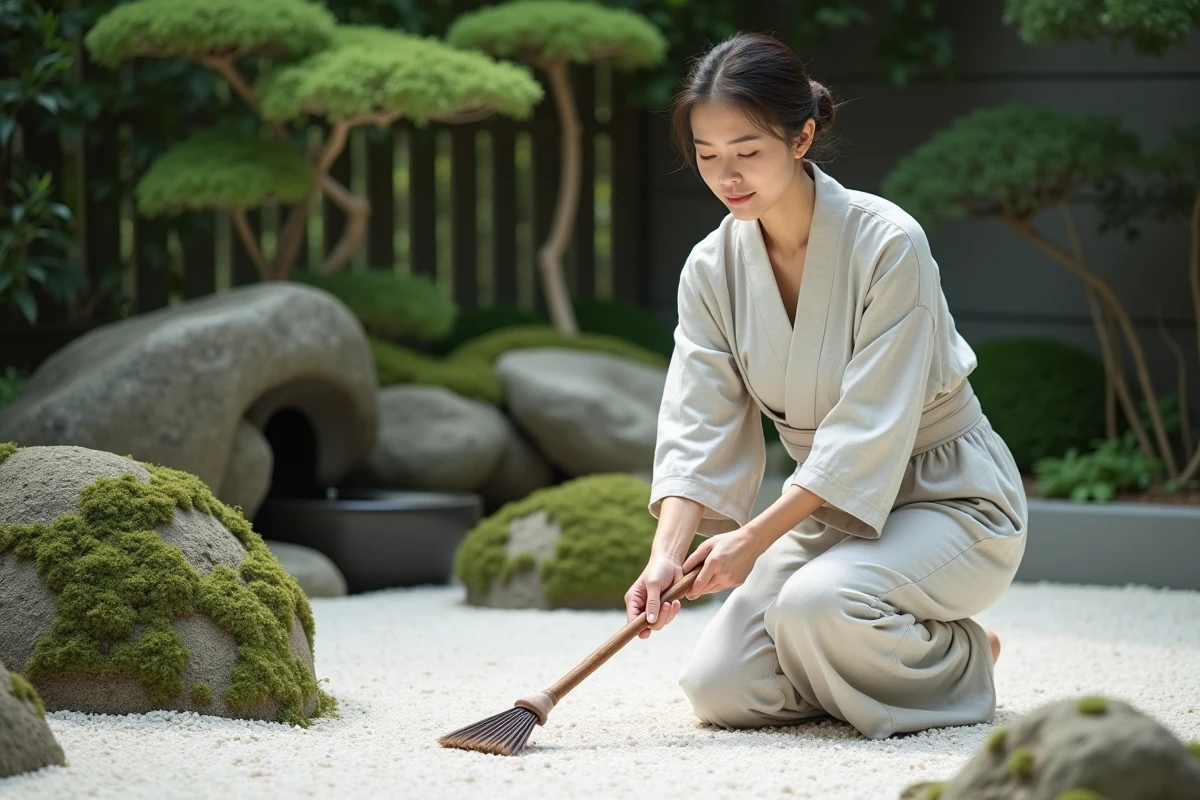
The zen garden often confounds at first glance with its simplicity, sometimes perceived as an almost austere rigor. Yet, it has attracted generations seeking a space where stone, vegetation, and water establish a silent dialogue. Here, nothing is ostentatious: each element finds its place in a precise composition, designed for contemplation and relaxation. The stones, carefully arranged, symbolize eternity; the raked gravel evokes movement, the fluidity of time. There is no overwhelming vegetation: everything is a matter of balance, restraint, and intention.
The concept of ma, this interval, this emptiness that structures space, permeates the entire philosophy of Japanese zen gardens. The alternation between shadow and light, between masses and open spaces, invites one to slow down, to pause on details: the rustling of bamboo, the moss clinging to a rock, the slender silhouette of a Japanese maple. Here, nature is not tamed but celebrated in its simplicity, in its ability to soothe, to invite reflection.
Creating a zen garden involves a skillful blend of rigor and instinct. The approach highlighted by jardinjade.com is based on the characteristics of traditional Japanese gardens: asymmetry, natural materials, the presence of water, and careful selection of plants. It is not a succession of clichés, but a way to arrange a space that fosters meditation and inner peace.
What are the essential elements for an authentic zen space?
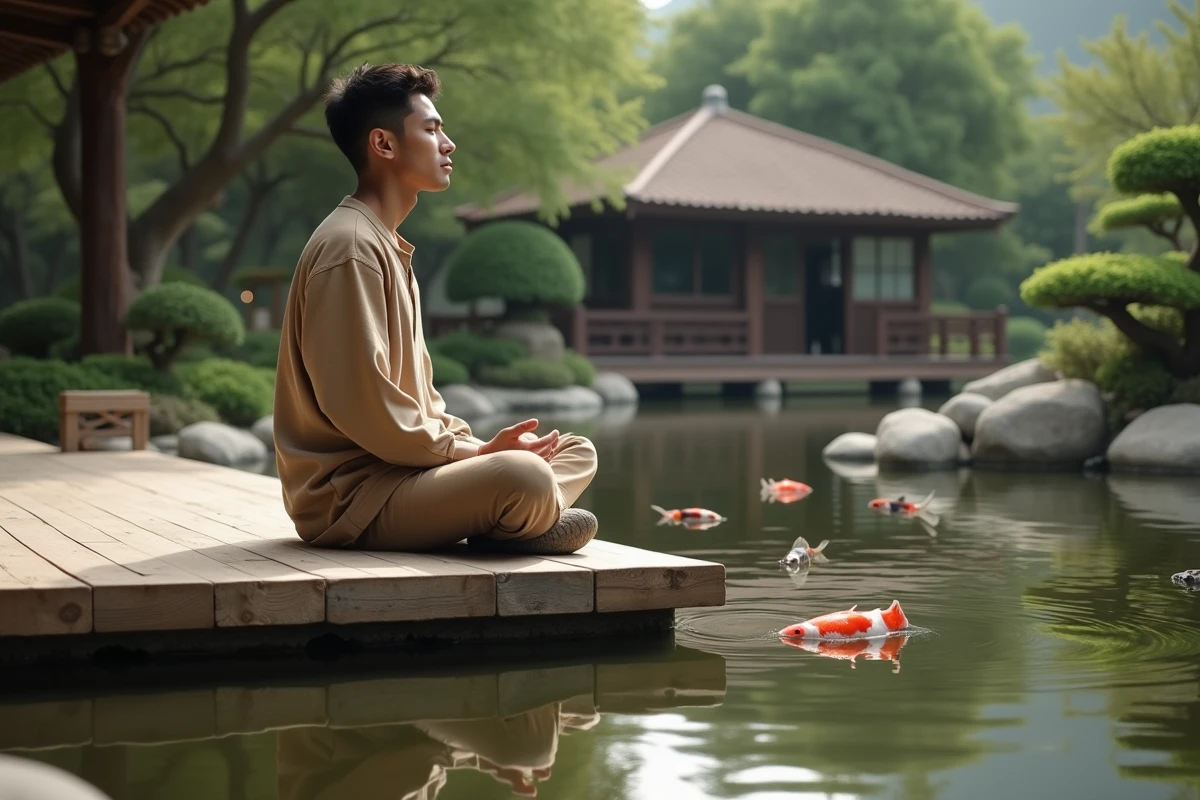
To shape a Japanese zen garden, the combination of natural materials and symbols proves crucial. The stone outlines the structure of the place, embodying stability and permanence. The pebbles placed with care mark meditation paths. The water, whether from a discreet pond or a bamboo fountain, infuses freshness and movement. The gentle splashing lulls, sets the pace for the walk, and reminds us that everything passes.
Among the characteristic elements, the Japanese lantern, whether made of stone or metal, provides soft light, conducive to reflection when night falls. The bamboo plays on two registers: it marks verticality and serves as a natural filter for wind or prying eyes. The wood, used for bridges, seating, or walkways, warms the atmosphere and beautifully ages over time.
In terms of plants, the Japanese maple remains a flagship choice, accompanied by mosses, ferns, or a few discreet perennials. These plants highlight the seasons, remind us of ephemeral beauty, and invite restraint. For the layout, it is primarily about dosage: playing with heights, varying masses, and creating open spaces to aerate the composition.
Here are the elements that give the zen garden its identity and strength:
- Stone: structure, grounding, symbolism
- Water, fountain, pond, bamboo fountain: movement, freshness, musicality
- Bamboo and Japanese maple: verticality, delicacy
- Japanese lantern: soft light, intimate atmosphere
- Wood: warmth, natural patina
The key is restraint. To design a zen garden, it is better to aim for precision and rhythm rather than the accumulation of objects or plants. Every element matters, as does every absence.
Practical tips and inspirations to avoid mistakes and succeed in your zen garden
Composing a zen garden requires precision and a keen sense of detail. Before starting, take the time to observe the light, the quality of the soil, and how one moves through the space. Harmony is paramount: each element must interact with those around it. Too much vegetation or decoration weighs down the whole. It is better to embrace simplicity, discreet asymmetry, and the subtle repetition of certain forms. Strict symmetry has no place in this universe.
To design a space that invites relaxation and meditation, draw inspiration from traditional Japanese gardens: let the mineral dominate, add carefully chosen plant touches, and combine pebbles, mosses, and bamboos to create rhythm in the view and the path. Winding paths slow down movement, calling for observation. Empty spaces give breath to the whole, enhancing the sense of calm.
When selecting materials, turn to local species if they evoke the spirit of Japanese zen. Sometimes, a dwarf maple or a local fern can advantageously replace more exotic species.
Common mistakes to avoid
Keep in mind these classic pitfalls to avoid for a successful setup:
- Multiplying statues and ornaments: limit yourself to one Japanese lantern or a fountain placed thoughtfully.
- Neglecting maintenance: moss takes time to settle, and gravel must remain neatly raked.
- Introducing overly invasive plants that disrupt the composition.
To create a haven of peace around the house, draw inspiration from the characteristics of the Japanese garden: simplicity, respect for nature, staging of silence. The challenge lies in the ability to give space to the area, to foster a subtle dialogue between plant and mineral. The art of the zen garden is the art of letting the landscape breathe, and, by extension, the spirit of those who linger there.