Disinfectant products based on quaternary ammonium compounds pose an animal health problem that most labels do not detail. Sanytol, used in the majority of French households for cleaning floors and surfaces, contains active substances whose toxicity varies depending on the exposed species. Cats and dogs metabolize these molecules differently, and cases of household poisoning related to household disinfectants have increased since 2020 according to European veterinary poison centers.
Quaternary ammoniums in Sanytol: why cats are more exposed than dogs
Some Sanytol wipes and multi-purpose disinfectants contain quaternary ammoniums (often abbreviated as “quats”), a family of biocides effective against bacteria, yeasts, and enveloped viruses. The European Chemicals Agency (ECHA) classifies these compounds among irritant substances, with updated safety data sheets in 2023 for “quaternary ammonium compounds, benzyl-C12-16-alkyldimethyl, chlorides”.
The problem lies in a feline metabolic peculiarity. Cats have a limited hepatic glucuronidation capacity, an enzymatic process that normally allows for the elimination of certain toxins. Dogs have this metabolic pathway more completely. A cat that licks a freshly treated surface therefore absorbs residues that its liver struggles to neutralize.
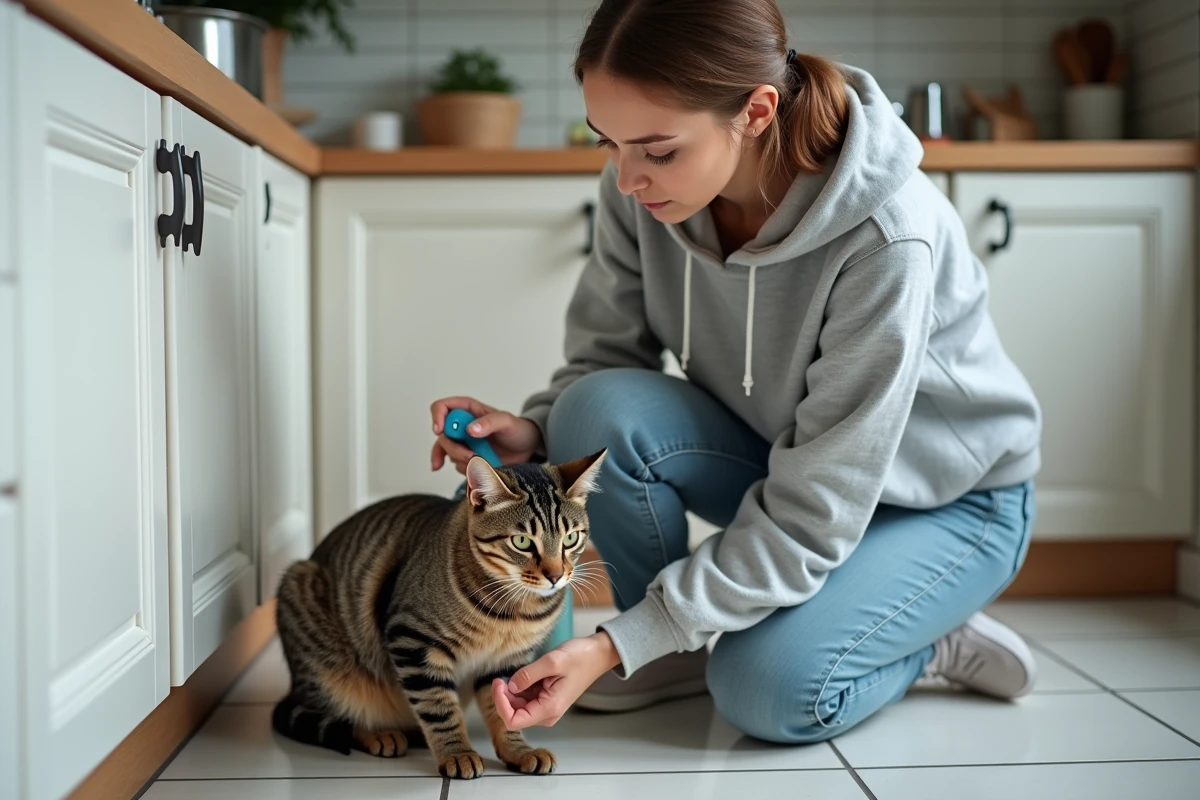
The grooming behavior exacerbates exposure: a cat spends several hours a day licking its paws and fur. After walking on a floor cleaned with Sanytol, it ingests traces of the product at each grooming session. The question of whether Sanytol is dangerous for cats and dogs represents a real risk thus deserves a nuanced answer depending on the species concerned.
Signs of poisoning from household disinfectants in cats and dogs
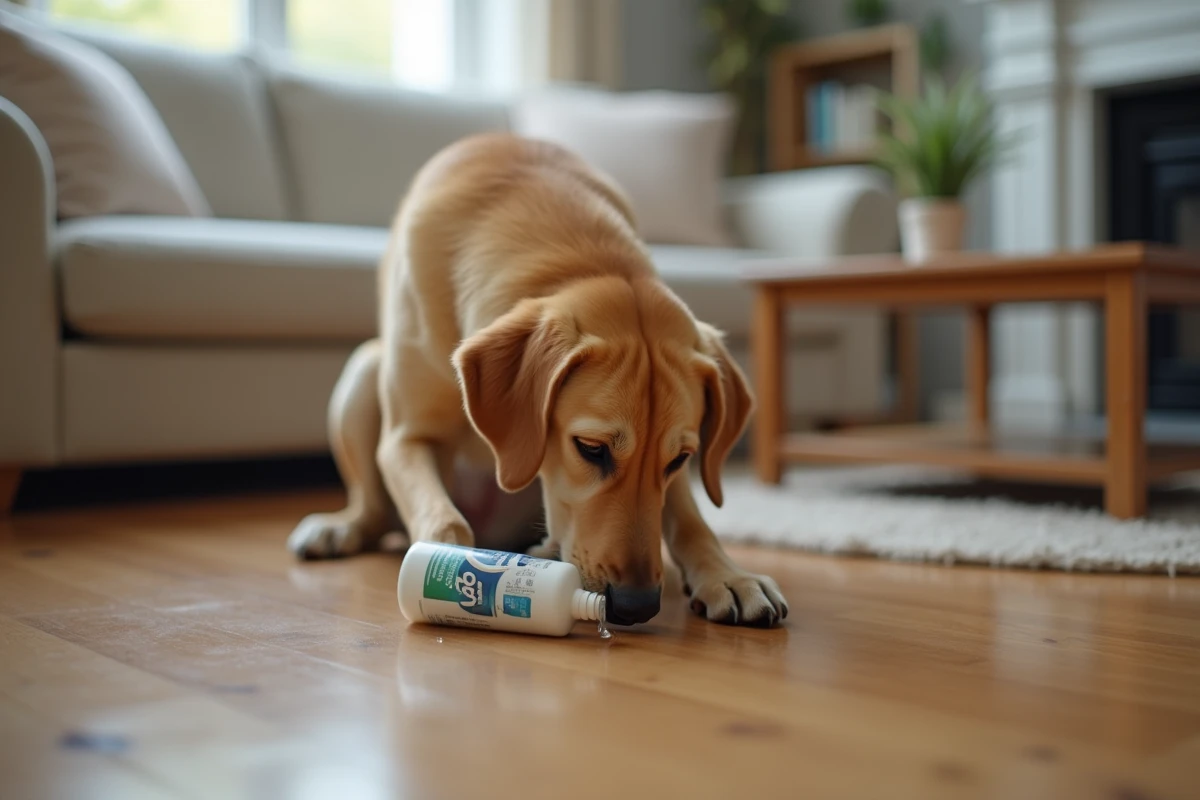
Reported cases in veterinary toxicology after licking surfaces treated with quat-based formulations describe a fairly consistent clinical picture. The available data do not specifically link these cases to Sanytol, but comparable formulations produce similar effects.
In cats, the most common signs are:
- Oral chemical burns visible as redness or ulcerations on the tongue and gums, sometimes accompanied by a refusal to eat
- Significant and sudden hypersalivation, often the first signal noticed by owners
- Repeated vomiting in the hours following exposure, which can lead to rapid dehydration
- Acute respiratory distress in cases of prolonged inhalation of vapors, especially in poorly ventilated rooms
In dogs, the symptoms remain similar but tend to be less severe for equivalent exposure, precisely due to a better hepatic detoxification capacity. Field reports vary on this point: some veterinarians report severe cases in small dogs that have directly licked the concentrated product.
Increase in disinfectant poisonings since the pandemic
European veterinary poison centers have observed a notable increase in calls related to the ingestion or licking of household disinfectants since 2020. The Animal Poisons Bureau (UK/Ireland) indicates in its 2022 report that surface disinfectants are now among the top 10 causes of domestic exposure in dogs and cats, whereas they were less frequent before the pandemic.
This increase can be explained by more intensive and frequent use of disinfectant products in households. Floor surfaces, countertops, and door handles are treated more often, which multiplies the opportunities for contact for an animal that operates close to the ground.
The correlation between cleaning frequency and risk of animal exposure is not specific to one brand. Sanytol, due to its wide distribution in France, logically accounts for a share of reports, but any product containing quats or benzalkonium chloride presents a comparable risk profile.
Cleaning precautions to protect cats and dogs from Sanytol
The Sanytol brand itself recommends adhering to the indicated doses and rinsing surfaces after application. In practice, this rinsing is often neglected, especially for floor cleaning.
Rinsing and ventilation after disinfection
A rinse with clear water after the contact time significantly reduces the amount of active residues on surfaces. Letting it dry is not sufficient: quaternary ammoniums form a persistent film that drying does not eliminate. Ventilating the room during and after cleaning also limits the inhalation of irritating vapors.
Isolating animals in another room during cleaning and for thirty minutes after rinsing is the most effective precaution. Cats, which naturally seek warm and smooth surfaces (sunlit tiles, countertops), are the first to come into contact with a freshly treated floor.
Alternatives to Sanytol for disinfecting without toxic risk
Diluted white vinegar and baking soda frequently appear in veterinary recommendations as lower-risk alternatives for routine cleaning. Their disinfecting power remains inferior to that of quats against pathogenic bacteria, but for standard domestic use (outside a medical context), they cover usual needs.
For situations requiring true disinfection (sick animal, proven contamination), products based on lactic acid exist within the Sanytol range itself. Anses has evaluated the family of biocidal products “Sanytol Lactic SA-APP” based on lactic acid (between 0.86 and 0.871%), designed to combat bacteria, yeasts, fungi, and enveloped viruses. Lactic acid presents a more favorable animal toxicity profile than quaternary ammoniums, although rinsing remains recommended.
The choice of cleaning product in a household with pets involves a trade-off between disinfecting effectiveness and toxic exposure. Reading the composition on the label, identifying the presence of quats or benzalkonium chloride, and systematically rinsing with clear water after each application remain the most concrete actions to reduce the risk of poisoning in both cats and dogs.