Riding a 125 cc motorcycle with a category B license is not always enough to stay legal. Regulations impose a mandatory seven-hour training for affected drivers, even after several years of holding a car license. Some profiles, however, escape this obligation due to a driving history that is difficult to prove or unknown equivalences.
Administrative procedures, access conditions, and the content of the training vary depending on the situation. Driving schools are seeing an influx of candidates facing sometimes changing rules and waiting times.
125 License: Who Can Benefit and Under What Conditions?
In France, access to driving a 125cc motorcycle or a scooter of equivalent displacement is strictly regulated. Several categories of licenses coexist to regulate this right. The A1 license allows, from the age of 16, to take the handlebars of a light two-wheeler, provided that the theoretical and practical exam stages have been successfully completed. However, in reality, the majority of candidates rely on their B license to access the 125cc.
For those who have held a B license for more than two years, a 7-hour training at an accredited establishment is generally required. An exception exists for drivers who can justify, through an insurance certificate, their regular experience on 125cc between 2006 and 2011. This rule aims to enhance safety, impart essential reflexes, and instill specific knowledge for riding a motorcycle. The course includes a theoretical component, exercises on a closed course, and a road situation assessment.
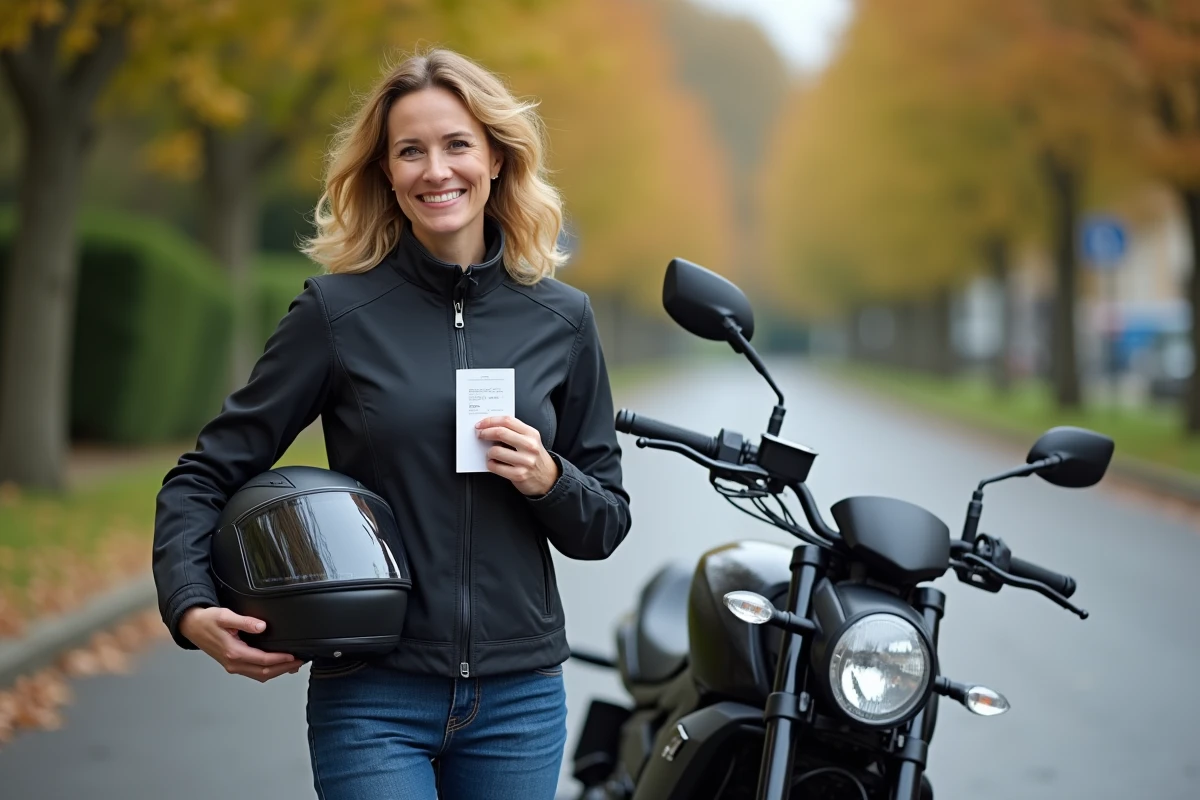
The 125 license card for riding 125 formalizes this extension. It is required during roadside checks, certifies the regularity of the process, and protects against any penalties in case of violation. Without this document, riding a 125cc exposes one to hefty fines and possible legal action.
| License Category | Access Conditions | Authorized Vehicles |
|---|---|---|
| A1 License | Minimum 16 years + exam | 125cc motorcycles and scooters |
| B License + training | 2 years of B license + 7h of training | 125cc motorcycles and scooters |
Training Process and Steps to Obtain the 125 License Card
The 7-hour training is aimed at all holders of a B license wishing to take the handlebars of a 125cc motorcycle or an equivalent scooter. Accredited driving schools organize this course in three parts to ensure solid mastery of two-wheelers.
Here’s how this mandatory course is structured:
- Theoretical Module: 2 hours to grasp safety concepts, understand motorcycle accidentology, navigate regulations, and review equipment. This session highlights the fundamental differences between cars and two-wheelers and raises awareness of specific risks.
- Closed Course Practice: 2 hours of exercises without traffic to learn how to handle the vehicle, brake effectively, avoid obstacles, or maintain balance at low speeds. It is in this setting that good habits are formed and reflexes are developed.
- Road Practice: 3 hours on the road, accompanied by an instructor. Candidates apply what they have learned, face real traffic conditions, adapt their behavior, and gain experience, both in urban and rural settings.
At the end of the 125 license training, an official certificate is issued. This grants the 125 license card issued by the administration. This step through the formalities is essential for riding in full compliance. After verifying the B license and adherence to the process, the extension is recorded on the license. Without this mention, even after completing the training, riding a 125cc motorcycle remains prohibited.

Practical Tips for Succeeding in Your Training and Choosing the Right Driving School
Success in the 125 license training depends as much on your involvement as on the choice of the establishment. Before enrolling, take the time to verify that the school is properly accredited to provide these seven mandatory hours. This accreditation guarantees compliance with regulatory expectations.
It’s better to arrive prepared: reviewing the highway code, familiarizing yourself with two-wheeler driving, and discussing with acquaintances who have already tried the experience can provide a real boost. Don’t hesitate to ask instructors about their methods, the equipment provided, or the size of the groups. A good driving school limits the number of participants per session, allowing everyone to progress at their own pace and receive personalized advice.
To help you make the right choice, here are some useful checks to perform:
- Always request a proof of insurance for the duration of the training.
- Pay attention to the condition and variety of the motorcycles offered: a well-maintained machine suited to your size facilitates learning.
- Inquire about the balance between theory and practice: prioritize schools that emphasize concrete exercises on the closed course and in traffic.
Also consider the flexibility of schedules, the possibility of condensing the training into one day or spreading it over two, depending on your constraints. Ask about the equipment provided: approved helmets, gloves, jackets, and fluorescent vests are sometimes included. Comparing several offers helps avoid unpleasant surprises. Attentive supervision, transparent pricing, and adapted pedagogy are key assets for obtaining the 125 license card and riding with peace of mind. Taking to the road on a 125cc also offers a new freedom, provided you respect the rules of the game. Who knows, this little piece of plastic could very well become the key to your next adventures.