
On a string trimmer, the power displayed on the technical sheet tells only part of the story. Two machines with the same wattage can offer radically different cutting performances depending on the mounted tool, the accepted wire diameter, and the motor design. Understanding what really happens between the motor and the cutting head helps avoid an oversized purchase or, worse, an undersized one for the intended work.
Absorbed power and useful power on a string trimmer: the distinction that changes everything
Manufacturers almost always communicate the absorbed power in watts, which is the electrical energy consumed by the motor. The power actually transmitted to the cutting head, after mechanical and thermal losses, is significantly lower. On an entry-level wired electric model, the gap can reach one-third of the advertised value.
For battery models, the nominal voltage (18 V, 36 V, 56 V) and the intensity in amp-hours determine the available energy. Comparing an 18 V string trimmer and a 36 V one solely by their displayed wattage makes no sense if the torque delivered at the effective cutting speed is ignored.
We recommend choosing the power of a powerful string trimmer by crossing three parameters: wattage, maximum wire diameter accepted by the head, and the type of vegetation targeted. A device that accepts a thick wire section without stalling under load confirms that its useful power matches its declared power.
Wire diameter and motor load: the true performance indicator
The power that can actually be used depends on the cutting tool mounted. A head with fine nylon wire puts little strain on the motor, while a thicker wire or a grass blade significantly increases resistance. On the same string trimmer, switching from a fine wire to a thick wire can notably drop the motor speed if the torque reserve is insufficient.
In practice, the wire diameter accepted by the machine is a better indicator of its cutting capacity than the raw wattage. A string trimmer that supports a generous wire section without losing speed has a motor properly sized for tall grasses and tough weeds.
The handle-tool configuration also modifies the measured vibrations. The values reported for the same machine vary depending on the handle and the accessory mounted. A thick wire generates more vibrations than a fine wire, which impacts comfort during prolonged sessions.
Round wire, square wire, twisted wire
- Round wire is suitable for edging finishes on short grass. It puts little strain on the motor and wears evenly.
- Square or star-shaped wire cuts dense grasses more effectively. It requires a motor with sufficient torque reserve to maintain speed.
- Twisted wire reduces cutting noise and limits debris, but creates slightly more resistance than round wire of the same section.
The choice of wire profile is therefore inseparable from the choice of power. A low-wattage string trimmer paired with a thick square wire will stall in dense vegetation, negating the benefits of the more aggressive wire.
Wired electric, battery, or gas: three power logics
A good quality wired electric string trimmer delivers constant power as long as the mains voltage is stable. The useful range generally lies between a few hundred and a thousand watts for models intended for individuals. The autonomy is unlimited, but the range depends on the extension cord.
On battery, the peak power is often comparable to that of a wired model, but it decreases as the battery discharges. The 36 V or 56 V platforms offer more sustained torque than the 18 V, which translates into better speed maintenance under load. The weight of the battery, however, increases fatigue during long sessions.
Gas string trimmers, usually of low displacement, develop more torque at low speeds. They remain relevant for plots far from any electrical outlet. Their noise level often exceeds thresholds requiring mandatory hearing protection beyond 80 dB(A) for prolonged periods, in accordance with the professional action thresholds set by the Labor Code (articles R.4431-2 and following).
Regulatory constraint in fire risk areas
In areas subject to fire risk, prefectures may restrict or temporarily prohibit the use of equipment that produces sparks. A gas string trimmer may therefore be unusable for certain weeks of the year, regardless of its power. If your land is on the edge of a forest or in a Mediterranean department, check the prefectural orders before investing in a gas model.
Noise and vibrations: the forgotten criteria that condition actual use
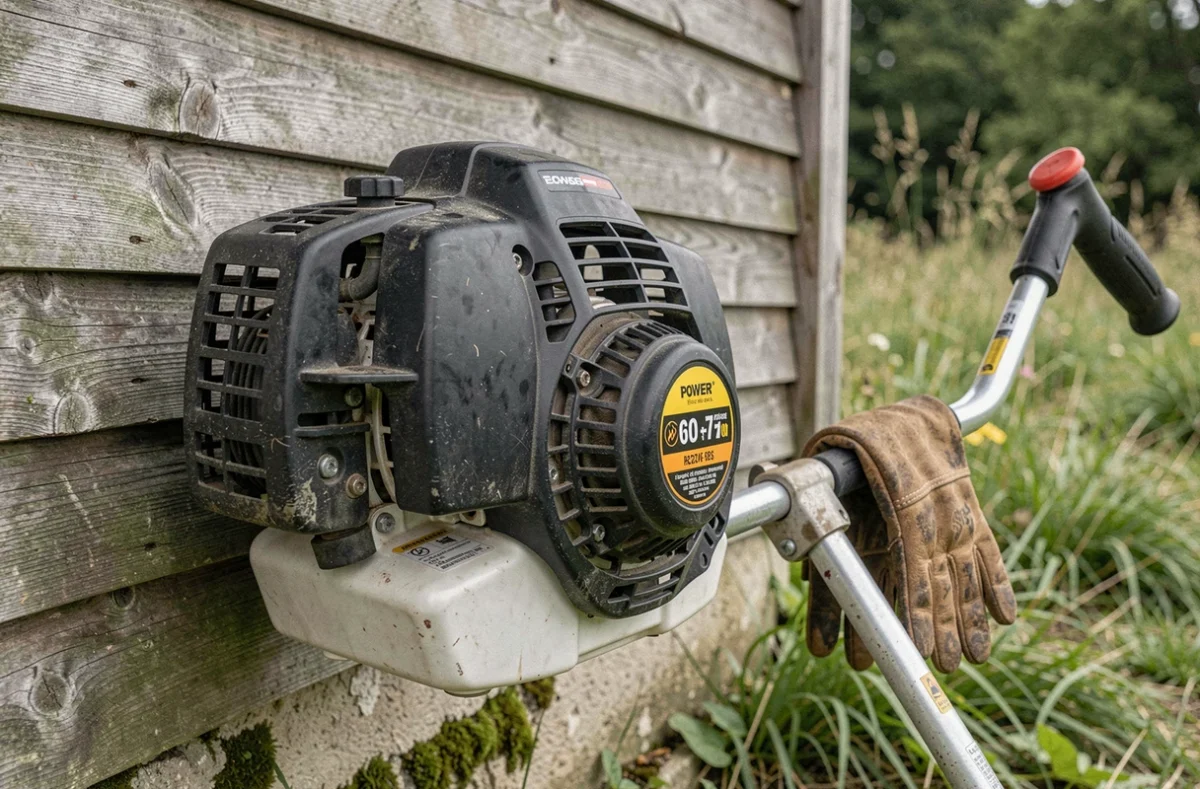
The power of a string trimmer determines its cutting capacity, but noise and vibrations determine how long you can actually use it. Some gas models exceed 100 dB(A), a level at which exposure for just a few minutes without hearing protection becomes problematic.
Electric and battery models are significantly below this, making them compatible with the mowing time restrictions imposed by municipal orders. The difference in comfort over an hour of use is considerable.
- Check the declared sound pressure level (in dB(A)) in the technical sheet before purchase. Manufacturers are required to provide this information.
- Check the values of vibrations transmitted to the hands (in m/s²). Beyond certain thresholds, regular breaks are necessary to limit musculoskeletal disorders.
- Prefer a harness or ergonomic handle as the power of the string trimmer increases, as the additional torque translates into more pronounced jolts.
A powerful but noisy and vibrating string trimmer will end up stored at the back of the garage after a few difficult uses. The best compromise combines power suitable for the targeted vegetation with a level of nuisances bearable over the actual duration of each session. It is better to have a slightly less powerful model that you will use regularly than an overpowered machine that you will dread taking out.