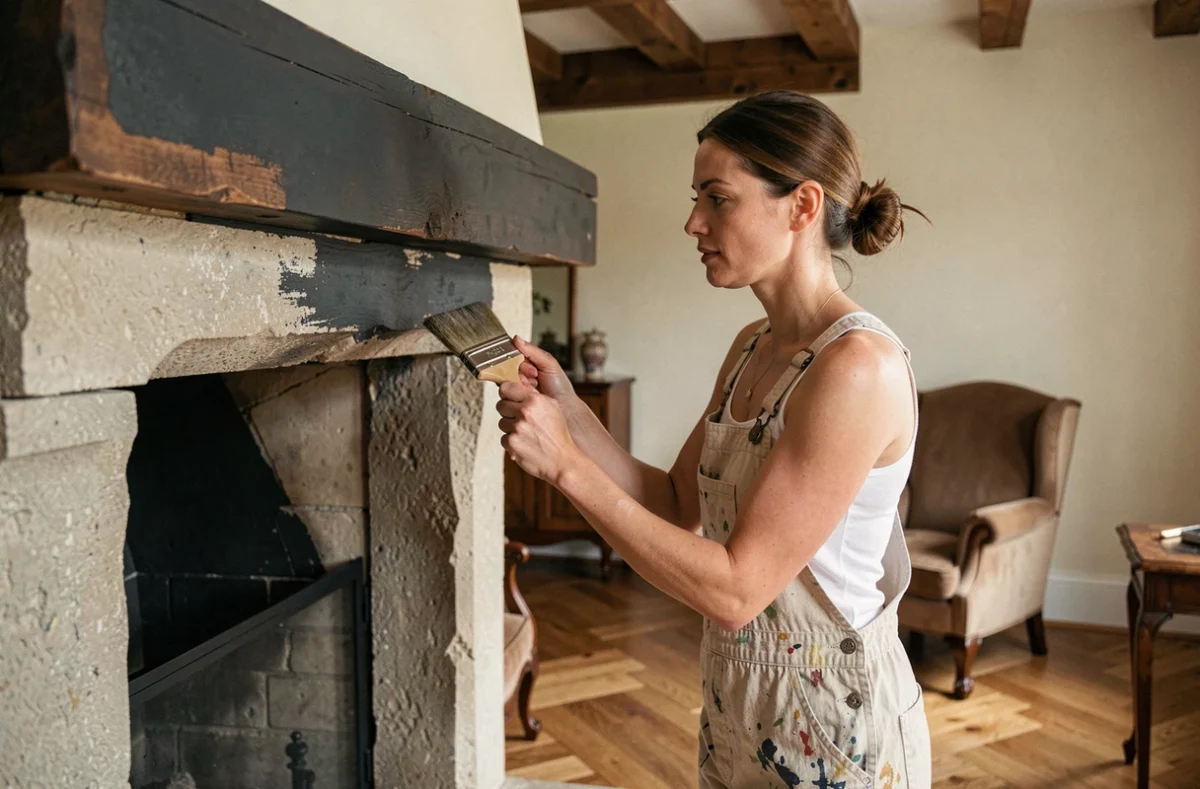
The chimney hood often occupies a large vertical space in the living room. Choosing the right paint color to refresh it is not just about flipping through a color chart. The material, the proximity to the fireplace, and the natural light in the room directly influence the final result, and some mistakes can even pose safety issues.
Check the condition of the hood before choosing a shade
Before thinking about a color, examine the surface of your hood. Cracks that quickly reappear, localized blackening, a persistent odor, or abnormal heating of a wall indicate a problem that paint should not mask.
In this case, have the installation inspected. The condition of the duct, its airtightness, and the distances to combustible materials should be checked by a professional. Painting over a structural defect delays a safety diagnosis.
If the hood is in good condition, identify the material: plaster, brick, stone, metal, or drywall. Each surface accepts a different type of paint. A smooth plaster hood is prepared differently than a raw brick hood. When looking for the right paint color for a chimney hood, choosing the product suitable for the surface determines the longevity of the shade over time.
Hot zones and cold zones: the criterion that color does not address
Have you noticed that some parts of the hood feel warm to the touch during a fire, while others remain completely cold? This temperature difference determines the type of paint to use, and thus the available colors.
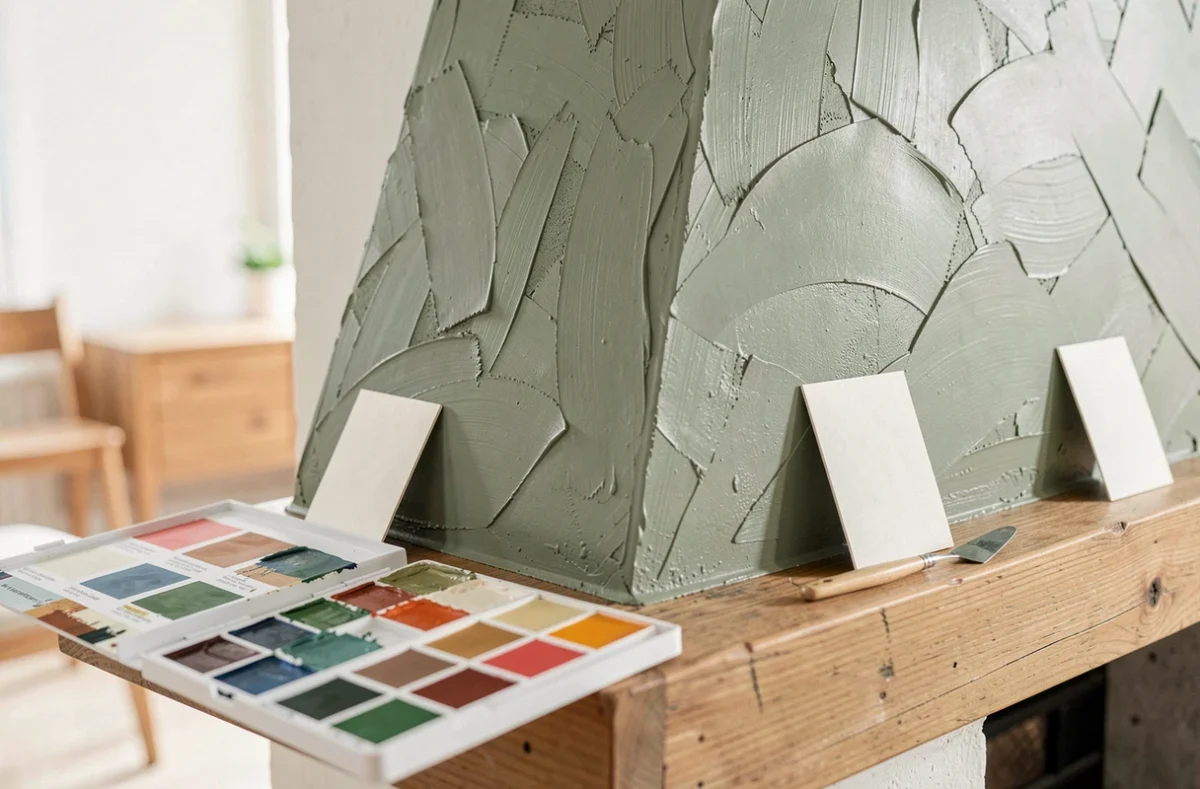
A standard wall paint is suitable for the cold parts of the hood, meaning those that never heat up. A standard acrylic offers a wide range of shades: off-white, pearl gray, deep blue, terracotta.
The metallic areas near the fireplace or directly exposed to heat require high-temperature paint. The problem: these products come in a limited palette. Matte black, anthracite, dark gray, sometimes white or aluminum. If you dream of a sage green covering the entire hood, first check which areas actually heat up.
High-temperature paints are often designed for metal and do not automatically apply to brick, stone, or plaster. Reading the product label remains the most reliable reflex before purchasing.
Paint color for the hood: adapting the shade to the light in the living room
Once the surface is identified and the heating zones located, the question of color can finally arise. Why does this choice depend so much on ambient light?
A north-facing living room receives cold, bluish light. A pure white appears grayish, and a beige leans towards a dirty yellow. In this configuration, a slightly warm off-white or a light gray with a beige undertone corrects the coldness without darkening the room.
Conversely, a living room bathed in natural light better supports bold shades. A midnight blue, forest green, or anthracite on the hood creates a focal point without overwhelming the room. The hood becomes a decorative element rather than a volume one tries to hide.
Light shades: beware of marks
Light colors visually enlarge the space and blend the hood into the wall. However, a very light shade makes heating and smoke marks much more visible. Areas close to the fireplace accumulate deposits over the course of fires. If you choose white or linen beige, plan for regular cleaning, or even touch-ups at the end of the heating season.
Dark shades: contrast and reduced maintenance
Matte black, anthracite, or midnight blue better conceal dirt. On a large hood, a dark color can appear imposing. Always test a sample directly on the surface at different times of the day before committing.
Matte or satin finish: the impact on color rendering
The finish alters the perception of color as much as the shade itself. This point is often overlooked.
- The matte finish absorbs light and hides surface imperfections (small bumps, plaster joints, uneven grain). It gives a mineral look, close to stone or plaster. On an old hood with imperfections, this is the most forgiving choice.
- The satin finish reflects more light. It is easier to clean (a damp sponge is enough for light marks) but reveals every flaw in flatness. On a perfectly smooth hood, it adds depth to the color.
- The glossy finish should be avoided on a chimney hood. It accentuates all defects and creates artificial reflections that are not compatible with the spirit of a fireplace.
In concrete terms, a light gray in matte and the same gray in satin do not produce the same visual effect at all. One will appear softer, the other colder. Buy a small test pot in each finish before making a decision.
Coordinate the hood with the rest of the room
The hood does not exist in isolation. Its color interacts with the adjacent wall, the floor, the furniture, and the mantel.
- If the living room walls are white or very light, a hood in a slightly deeper tone (greige, taupe, medium gray) creates a subtle distinction without a harsh break.
- If you opt for a strong contrast (black hood on white walls), repeat the same dark shade on another element in the room (bookshelf, door frame, TV unit) to visually balance the whole.
- The mantel and the sides of the fireplace can remain in their original material (stone, wood, brick) while the hood receives color. This play of materials enriches the decor without uniformity.
Painting the hood the same color as the wall works when you want to erase the volume. It is an effective solution in rooms where the hood appears too massive or poorly proportioned.
The final choice depends on three concrete parameters: the nature of the surface and its thermal constraints, the natural light in the living room, and the chosen finish. Always test a sample in situ, observe it in natural light and artificial lighting in the evening, then decide. A well-painted chimney hood can transform the atmosphere of a living room for several years.