
Sport encompasses both codified physical activity and a collective spectacle built around competitions. In France, nearly eight in ten people say they are as interested in sport as they used to be, or more so, and fans follow an average of almost three disciplines. This dual dimension—on the field and in the stands—fuels an enthusiasm that goes beyond athletic performance or simple entertainment.
The growing diversity of sports in France
Interest in sport is no longer driven solely by long-established federations. The INJEP’s 2025 barometer highlights strong growth in racket sports: badminton, table tennis and, above all, padel within the French Tennis Federation. These sports are attracting adults who had not previously exercised regularly.
At the same time, most people who play sports still do so independently, without a club or an app. However, the use of commercial providers, such as fitness centers and private coaching, is growing. The idea that more fans automatically means more registered members therefore needs to be qualified.
To explore the sports gaining ground and those that keep their audiences coming back, sport on So Sports offers a useful overview of the changing sporting landscape. This growing diversity of activities is also changing the profile of spectators: a padel fan discovers professional tennis, while a runner takes an interest in athletics meets.
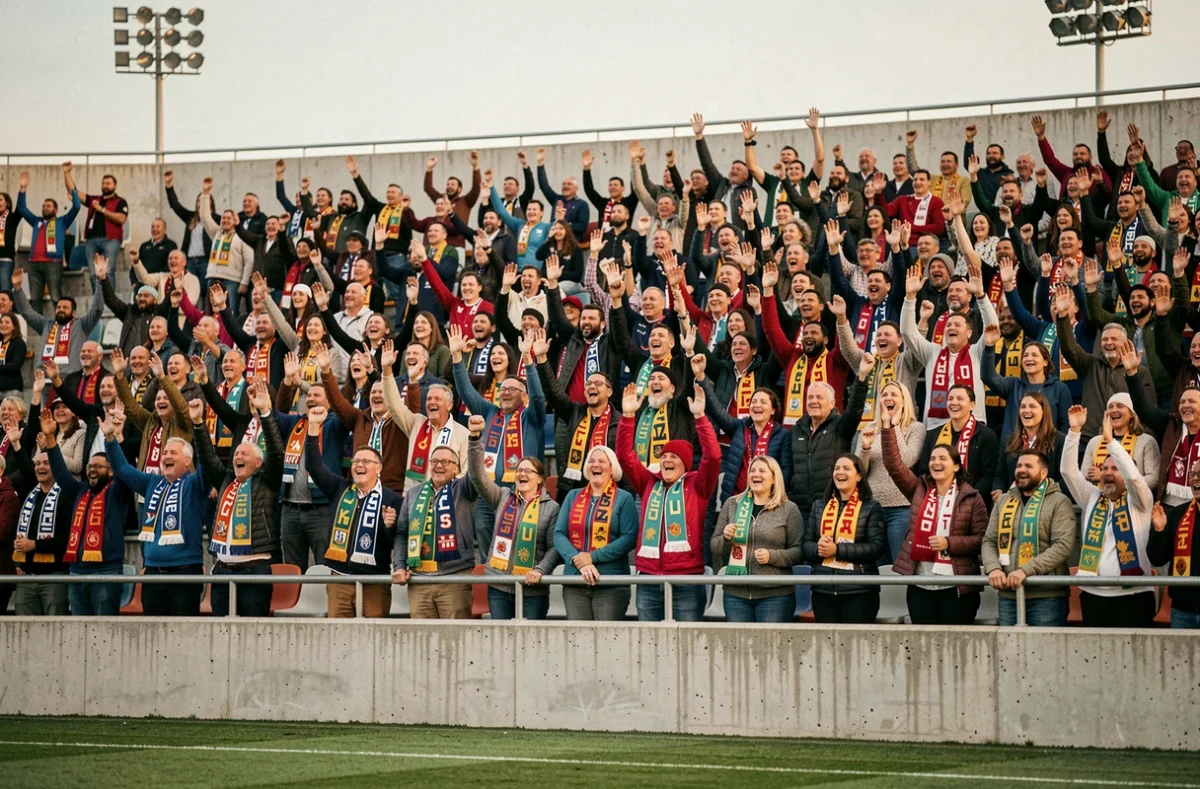
A sense of belonging and shared emotions in the stadium
A stadium is a place where thousands of people share an emotion in real time, without a digital filter. This dynamic is rooted in a specific concept: a sense of belonging to a sporting community. Supporting a team in person creates an immediate social bond between strangers, united by a common goal.
Research by BloomTime for the Jean-Jaurès Foundation describes the stadium as a place where community, real-world experiences and human connections reclaim a role that digitalized daily life tends to diminish. Total immersion, the noise and the physical proximity of other supporters create an emotional intensity that is difficult to replicate elsewhere.
Why the experience in the stands goes beyond the match itself
A football match lasts ninety minutes, while a rugby match lasts two hours. But the experience in the stands begins long before kick-off and continues afterwards. Pre-match rituals—travelling together, singing and gathering outside the stadium—as well as post-match analysis all contribute to a structured escape from everyday life.
According to Two Circles data, iconic clubs such as Stade Toulousain, PSG and Olympique de Marseille are among those with the highest proportions of passionate fans. This is no coincidence: these clubs cultivate strong identities rooted in their local communities, reinforcing the sense of belonging.
The profile of sports fans: more women and a new generation
The expansion of the sporting audience is driven by two measurable demographic trends. The first is the growing presence of women in stadiums and watching sports on screen in recent years. The second concerns younger generations, who consume sport differently from their elders.
- The growing number of women in sports audiences has gone hand in hand with increased media coverage of women’s competitions. However, women’s registrations grew more slowly than men’s in 2025, and their share of the total fell slightly.
- French fans follow more than five competitions on average, led by the World Cup, the Euros and Roland-Garros. This points to an interest in multiple sports rather than exclusive loyalty to a single discipline.
- France’s football and rugby teams represent the high points of national sporting emotion, bringing people together beyond the usual circles of supporters during major international competitions.
The growth in women’s participation is not linear. Media visibility and federation membership are not increasing at the same pace. A sport can attract more female spectators without gaining more registered female members, because independent activities such as running, fitness and yoga absorb some of this interest.

Fan experience and the transformation of football stadiums
The term fan experience refers to all the features designed to enhance the spectator’s experience beyond the sporting event itself. Giant screens, Wi-Fi connectivity, premium food and drink, and pre-match entertainment are turning stadiums into all-in-one destinations.
This shift is driven by economic pressures. Ticket sales alone are no longer enough to fund professional clubs. Brands are investing in hospitality and marketing activations integrated into stadiums. Spectators are becoming multichannel consumers, targeted before, during and after the match.
Authenticity versus commercialization in the stands
This move upmarket creates tension. Long-time supporters sometimes see the fan experience as diluting the traditional atmosphere. In an ultra-connected stadium where spectators check their phones between plays, a paradox emerges: the venue offers more services, but the collective fervor can become fragmented.
The challenge for clubs is to bring these two experiences together without letting one overwhelm the other. The stands behind the goals remain spaces of raw passion, while executive boxes and VIP areas cater to a different audience. The coexistence of these groups defines the modern stadium.
Sporting enthusiasm in France is fueled by the growing diversity of activities, a broader audience and the transformation of sporting venues. Access to facilities alone is not enough to eliminate differences in participation between social groups, and the growth in women’s participation remains uneven across disciplines. More people are becoming passionate about sport, but the paths from playing fields to the stands are not the same for everyone.