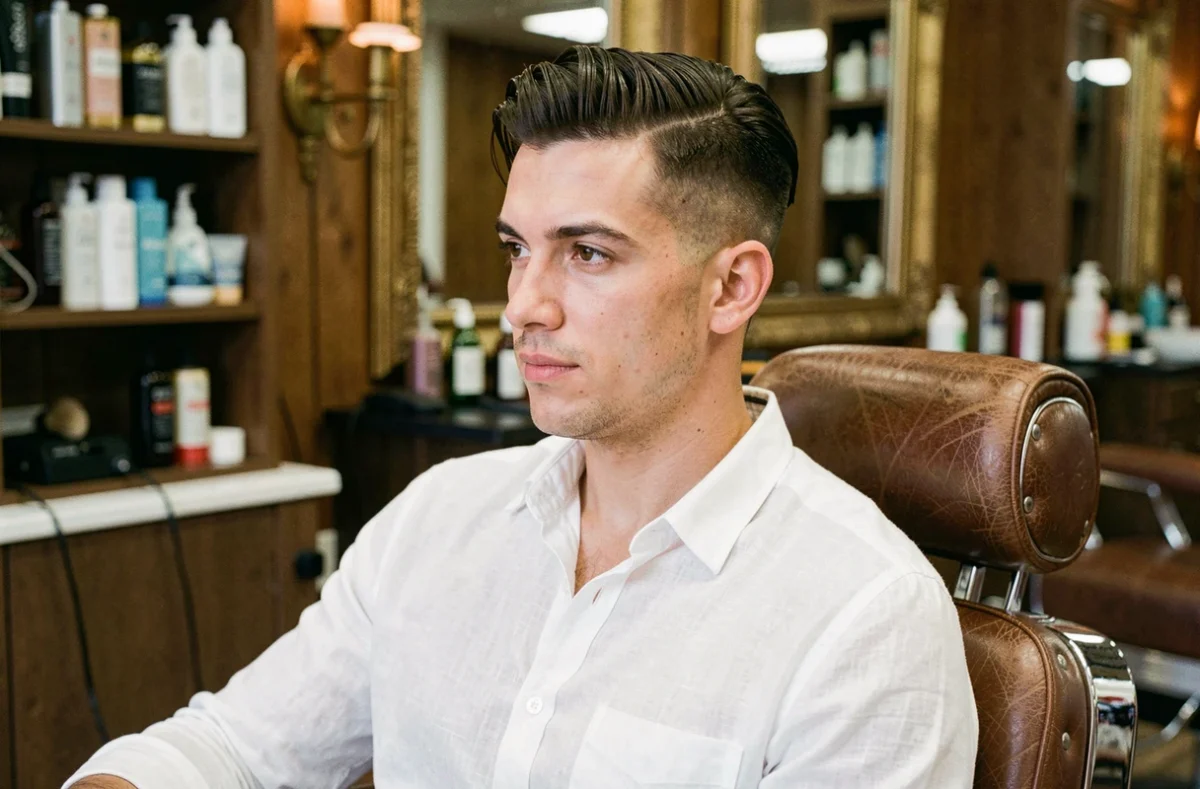
A man with medium-length hair that falls flat on the sides rarely gives the impression of a mastered style. The fade changes the game: it structures the hair silhouette without sacrificing length on top. However, it is essential to choose the right type of fade according to hair texture, frequency of visits to the barber, and the desired visual effect.
Texture created by the cut: the true lever for a successful medium-length fade
Many medium-length fades rely entirely on styling: wax, pomade, volumizing drying. The problem is that the result doesn’t last all day, and the cut, once washed, falls flat without structure.
The current trend favors a texture built directly by the cut. The barber works with scissors using techniques like point-cutting or internal thinning to create movement within the mass, rather than relying on styling products.
On wavy or curly hair, this approach works almost on its own: the curls find their own movement thanks to the different internal lengths. On straight hair, the barber must build the texture more by cutting irregular strands, especially at the fringe. If you’re looking for a trendy medium-length men’s fade haircut, it’s this internal texture work that makes the difference between a lively result and a uniform block.
The irregular fringe, worn on the forehead or slightly to the side, remains the most visible element of this style. It gives character to the face without requiring meticulous styling every morning.

Taper or fade on medium-length hair: two fades, two maintenance frequencies
Asking for “a fade” at the barber remains vague. In practice, two main families stand out, and they do not involve the same commitment.
The taper: soft transition and discreet regrowth
The taper tightens the temples, sideburns, and nape without going too high on the sides. The transition to the top remains gradual. The concrete advantage: the regrowth is more discreet and maintenance is spaced out. Generally, one visits the barber every five to six weeks to maintain a clean look.
This is the logical choice when you want a medium-length men’s fade that remains presentable between appointments, without the “sides growing out in a bushy way” effect.
The fade: marked contrast and frequent maintenance
The fade goes higher and creates a sharp contrast between the very short sides (sometimes shaved) and the length on top. The result is more graphic, more visible. In return, a fade requires maintenance every two to three weeks to stay sharp.
If you wear medium-length hair with volume on top, the mid fade offers a good compromise: it doesn’t go up to the top of the head but still creates a clear contrast with the long hair.
- Taper: soft transition, spaced maintenance, suitable for classic professional environments
- Low fade: discreet low fade, good compromise between sharpness and naturalness
- Mid fade: visible contrast, highlights the volume on top but requires regular touch-ups
- Skin fade: shaved at the bottom, maximum effect, regrowth visible quickly

Adapting the medium-length fade to your hair texture
The same fade does not look the same on fine hair and on thick hair. This is a point that inspiration galleries on Pinterest do not show: the photo displays a result, rarely the starting texture.
Thick or wavy hair
This is the most suitable texture for a medium-length fade. The strands naturally retain volume on top, and curls or waves create movement without product. The barber can thin generously to lighten the mass without risking losing visible density.
Fine or straight hair
Excessive thinning on fine hair removes visual density and gives a sparse result. Recent professional recommendations suggest removing volume from within the mass rather than shortening the surface. This way, the impression of thickness is maintained while avoiding a heavy effect.
For straight hair, the texture must be sculpted more by the barber. Point-cutting creates irregular tips that mimic natural movement. Opinions vary on this point: some find the result convincing after the first cut, while others need two or three visits for the barber to find the right balance between volume and lightness.
Daily styling of a medium-length fade: what works upon waking
The interest of a well-cut medium-length fade is precisely to minimize styling. But “minimum” does not mean “nothing.”
After showering, apply a light texturizing product (sea salt spray, matte styling cream) to damp hair, then let it dry naturally or use a hairdryer upside down for volume. That’s it. The product does not create the cut; it reveals the texture already built by the barber.
- Wavy hair: a sea salt spray is enough to define the curls and keep movement all day
- Straight hair: a matte texturizing cream gives separation to the strands without a cardboard effect
- Thick hair: a light balm disciplines the mass without weighing it down, focusing on the tips
The classic mistake is to use a strong wax or gel that freezes the cut. On medium-length hair, the style relies on the movement of the hair. A too-fixing product cancels precisely what the fade brings.

A successful medium-length fade is played out in the cut, not in the mirror in the morning. The choice between taper and fade mainly depends on how often you are willing to return to the barber. And the starting texture guides the type of thinning much more than any inspiration photo. Communicating these elements to your barber remains the most helpful gesture before sitting in the chair.